
Hello, I’m Wald, Product and Technical Director at Linyi Zhuozhu New Material Co., Ltd. One of the most common questions I receive from first-time buyers of flexible stone is deceptively simple: “Which designs should I choose?” It sounds like a matter of personal taste, but in reality, it is a commercial decision that affects container loading, inventory turnover, and ultimately whether a distributor can sell the stock profitably.
Instead of offering opinions, I want to share something more useful: real data. Below is an honest look at our factory’s production and sales over the past eleven months, and what those numbers mean for buyers.
First, the Two Categories of Flexible Stone Panels
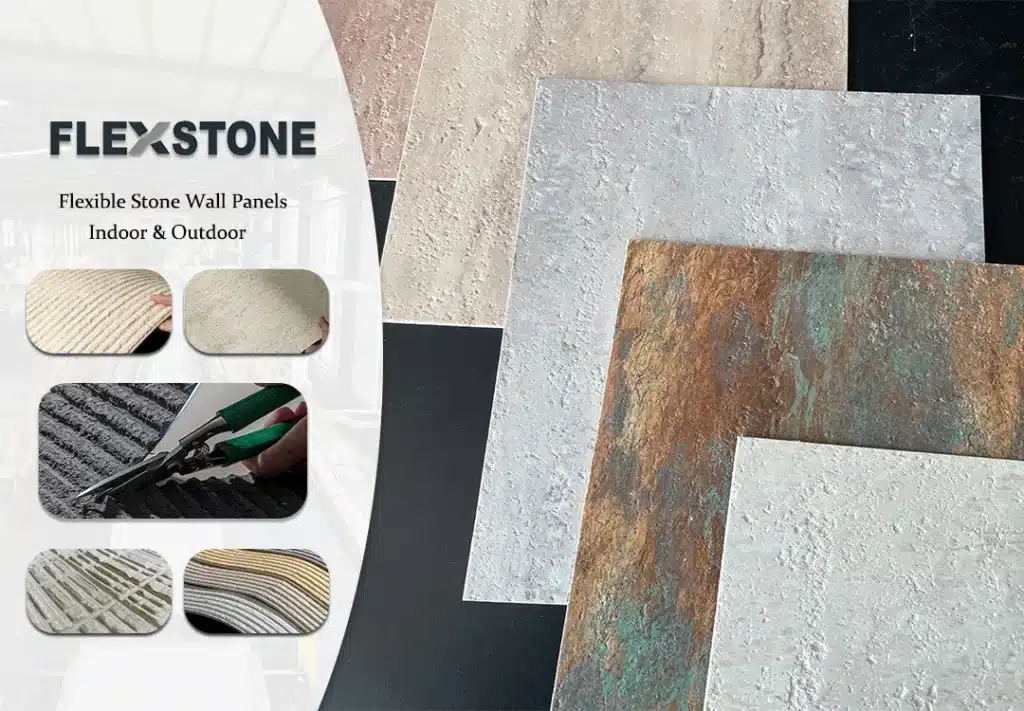
Before looking at any data, we need to be clear about how flexible stone panels are classified. We divide them into two major categories:
1. Base-color panels. These panels achieve their color through the formulation of the raw materials themselves. The color is consistent throughout the entire panel, with no color variation. The trade-off is that base-color panels cannot display intricate patterns—the visual interest comes entirely from the embossed texture and profile of the panel surface.
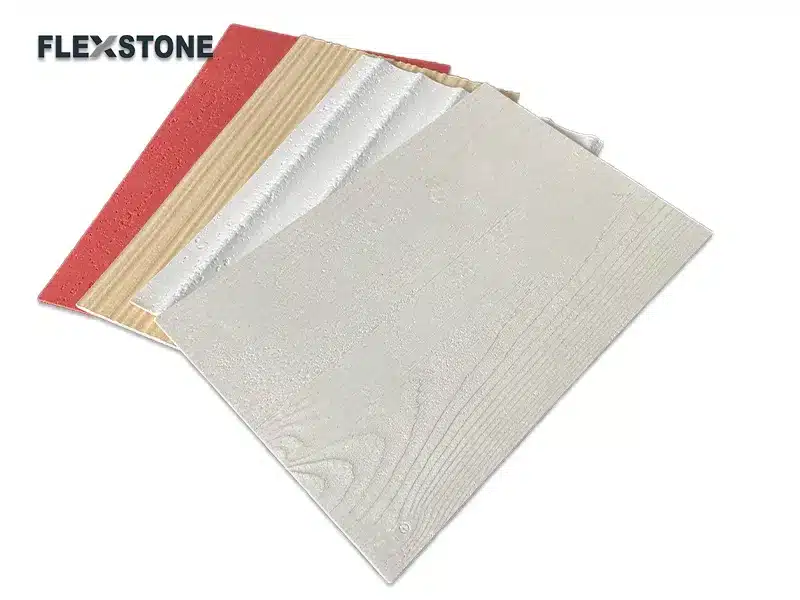
2. Printed and colored panels. These panels are produced by cutting the base panel and then using a printing machine to apply a specific pattern onto the surface. Virtually any design can be printed onto any panel.
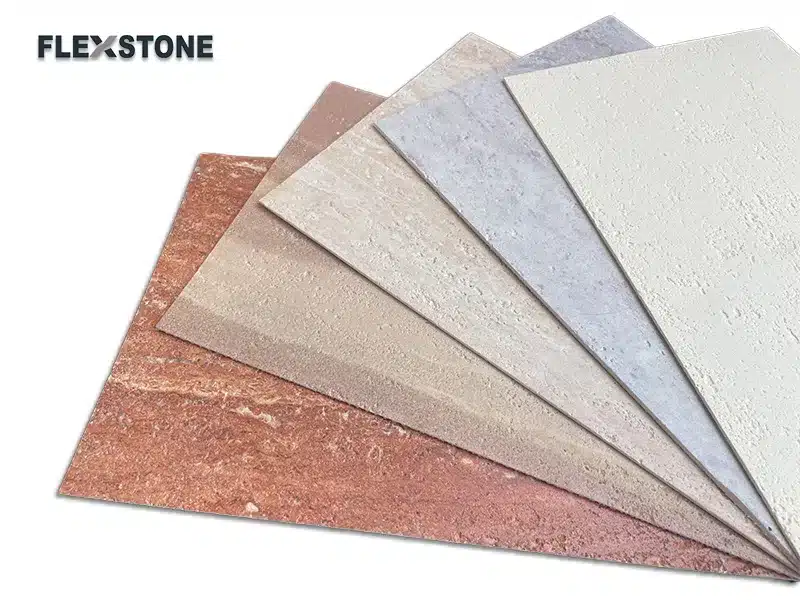
This distinction matters because it directly influences two factors that determine commercial success.
What Drives a Buyer’s Decision
From years of working with distributors and project buyers, I have observed that two factors dominate the purchasing decision:
- Loading volume. A container only becomes cost-effective when it is filled with enough material. The cost per square meter of shipping drops as the container approaches full capacity. This is why panel dimensions, packaging efficiency, and order mix all matter.
- Appearance. A beautiful, distinctive appearance is what allows distributors to actually sell the goods to end customers. A panel that sits in a warehouse because it does not appeal to homeowners or designers is a loss, no matter how good the technical specifications are.
With these two factors in mind, the sales data becomes much easier to interpret.
The 11-Month Sales Ranking
Here is how our flexible stone panel sales break down over the past eleven months:
| Rank | Product | Model | Share of Total Sales |
|---|---|---|---|
| 1 | Printed Travertine Flexible Stone Panel | ZZ63803 | 35% |
| 2 | Printed Slate Flexible Stone Panel | ZZ63801 | 15% |
| 3 | White Large Star-Moon Flexible Stone | ZZ63806 | 8% |
| 4 | Woven Flexible Stone | ZZ63601 | 4% |
| 5 | Roman Column Flexible Stone | ZZ63101 | 5% |
| 6 | Pathway Flexible Stone | ZZ63003 | 5% |
| 7 | Rough-Faced Granite | ZZ63804 | 7% |
| 8 | Flowing Water Stone Flexible Stone | ZZ63904 | 6% |
| — | Remaining designs | — | Evenly distributed |
What the Numbers Tell Us
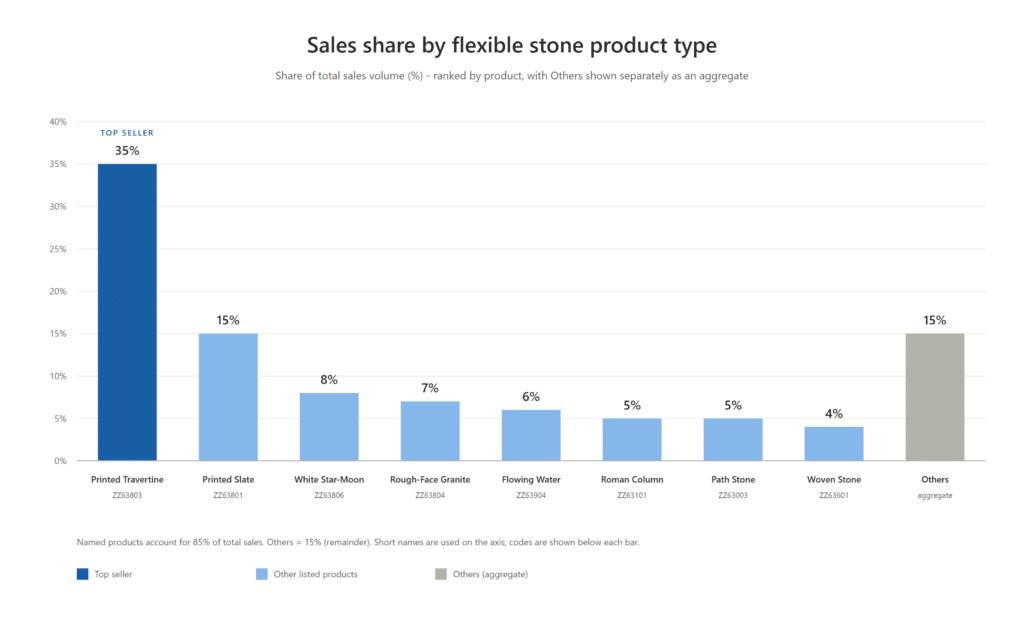
Printed panels dominate the top of the list. The top two products—printed travertine and printed slate—together account for 50% of total sales. This is a clear signal. When buyers have the freedom to choose any design, they overwhelmingly gravitate toward printed patterns that replicate natural stone looks. The reason is straightforward: printed panels offer the visual richness and recognizability of natural stone, which sells well to end customers, while retaining the flexibility and lightweight advantages of the flexible stone format.
Travertine is the single strongest performer. At 35%, printed travertine alone represents more than one-third of all sales. This is not an accident. Travertine has a timeless, warm appearance that suits a wide range of architectural styles—from residential facades to commercial interiors. It is a safe choice for distributors because it appeals to a broad customer base.
Printed slate follows at 15%. Slate offers a more contemporary, cooler aesthetic. It performs well in modern residential and commercial projects. Together, travertine and slate give distributors a strong one-two combination: one warm, one cool, covering the majority of customer preferences.
White Large Star-Moon at 8% is the highest-ranked base-color panel on the list. Its appeal lies in its clean, bright appearance and the subtle visual effect created by its embossed surface. It demonstrates that base-color panels can still perform well when the texture and profile are distinctive enough to compensate for the absence of printed patterns.
Mid-tier products show steady, balanced demand. Rough-faced granite (7%), flowing water stone (6%), Roman column (5%), and pathway stone (5%) each occupy a stable niche. These are not volume leaders, but they serve specific design preferences and should be part of a diversified order mix.
The remaining designs are evenly distributed. This tells us that there is no single “bad” design—different markets and different customers have different tastes. The long tail of designs collectively represents a meaningful portion of sales, and distributors serving diverse customer bases should consider including some of these in their orders.
Practical Advice for First-Time Buyers
Based on this data, here is what I recommend to clients placing their first order:
- Anchor your order with printed travertine and printed slate. These two designs together cover half the market demand. They are the safest bets for achieving quick turnover.
- Include one or two base-color panels with strong texture. White Large Star-Moon is a proven performer. Base-color panels have the advantage of absolute color consistency, which some project buyers specifically require.
- Add a small quantity of mid-tier designs for variety. Rough-faced granite and flowing water stone give your customers options without committing large volumes to slower-moving stock.
- Mind the container loading. Work with us on the order mix to ensure the container is filled efficiently. We can advise on panel dimensions and stacking arrangements that maximize the load.
- Ask us for samples before committing. We are happy to provide samples of any design so that you can evaluate the appearance and texture firsthand.
A Final Word
Data is not a substitute for judgment, but it is a powerful tool for reducing risk. These eleven months of production and sales figures are not marketing claims—they are the actual record of what buyers around the world have chosen. If you are new to flexible stone and unsure where to start, this data gives you a solid foundation.
If you would like to discuss your specific market, request samples, or receive a quotation based on a recommended order mix, reach out to me directly. I’m Wald, and I am always glad to help you make informed decisions.