
Hello, I’m Wald, Product and Technical Director at Linyi Zhuozhu New Material Co., Ltd. In my previous article, I shared our eleven months of sales data and explained the two fundamental categories of flexible stone panels—base-color panels and printed panels. Today I want to go one step further and talk about something that sits at the intersection of those two categories: the combination of embossed texture and printed pattern.
This is where flexible stone becomes truly interesting as a design material. And I have a recent project example that illustrates it perfectly.
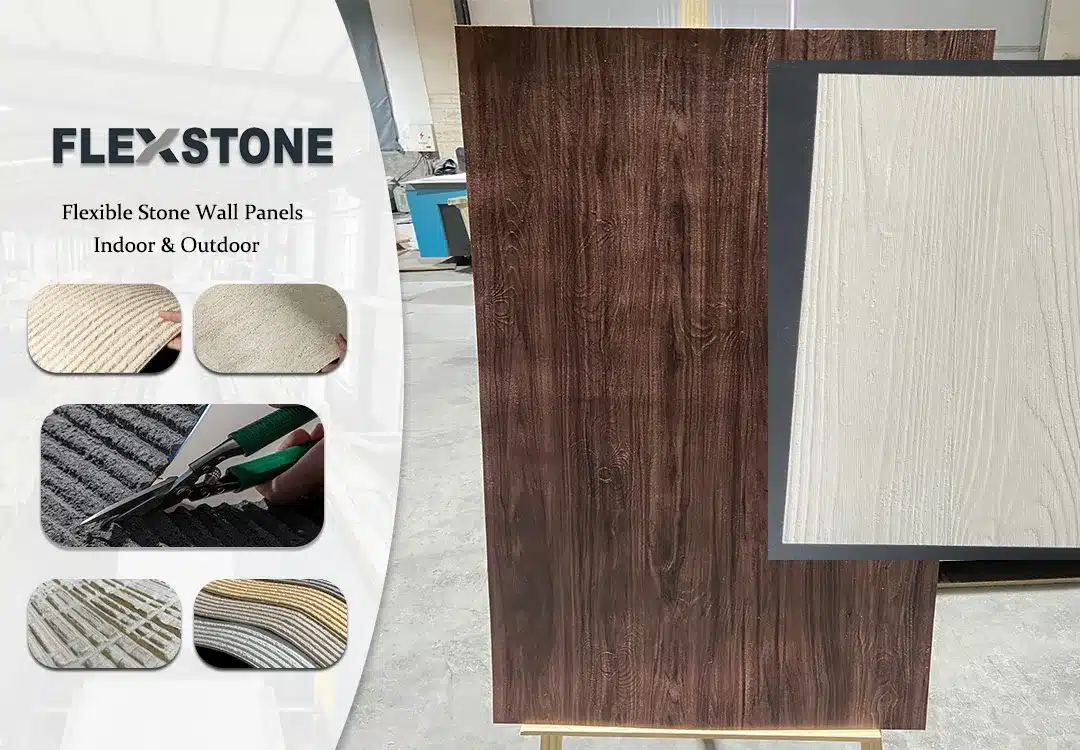
The Design Brief: American Walnut, But Not Wood
A client came to us with a specific requirement. They wanted a flexible stone panel that looked like American walnut—the rich, warm, dark-brown wood with its characteristic grain patterns and subtle color variations. American walnut is a premium material in interior and exterior design, valued for its depth of color and elegant appearance.
But the client did not want wood. They wanted flexible stone. Perhaps the application required the durability, moisture resistance, or fire performance of a mineral-based panel. Perhaps the project needed the flexibility that wood cannot offer. Whatever the underlying reason, the requirement was clear: the appearance of American walnut, delivered through a flexible stone panel.
This is exactly the kind of challenge our production team enjoys.
The Starting Point: Choosing the Right Base Texture
As I explained in my previous article, base-color flexible stone panels achieve their visual character through the embossed profile of the surface. The texture is not printed—it is physically formed into the panel during production. This means that before we can print any pattern, we must first select a base panel whose texture supports the intended appearance.
For American walnut, the texture is essential. Walnut has a distinctive grain—long, flowing lines that follow the length of the timber, with subtle undulations and a sense of natural movement. If we printed a walnut pattern onto a flat or randomly textured panel, the result would look artificial. The pattern would sit on the surface like a sticker, disconnected from the physical feel of the material.
So we worked with the client to select a base panel with a wood-grain embossed texture. The surface of this panel has been formed with fine, directional ridges and grooves that mimic the natural grain of wood. When you run your hand across it, you feel the same kind of tactile variation that you would expect from a real timber surface.
This texture serves two purposes. First, it provides the physical foundation for the visual pattern. Second, it adds a layer of realism that printing alone cannot achieve. Even before any color is applied, the panel already reads as “wood-like” to the touch.
The Printing Process: Bringing American Walnut to Life
Once the base panel was confirmed, the next step was the printed pattern. We used our printing equipment to apply a high-resolution American walnut design onto the textured surface.
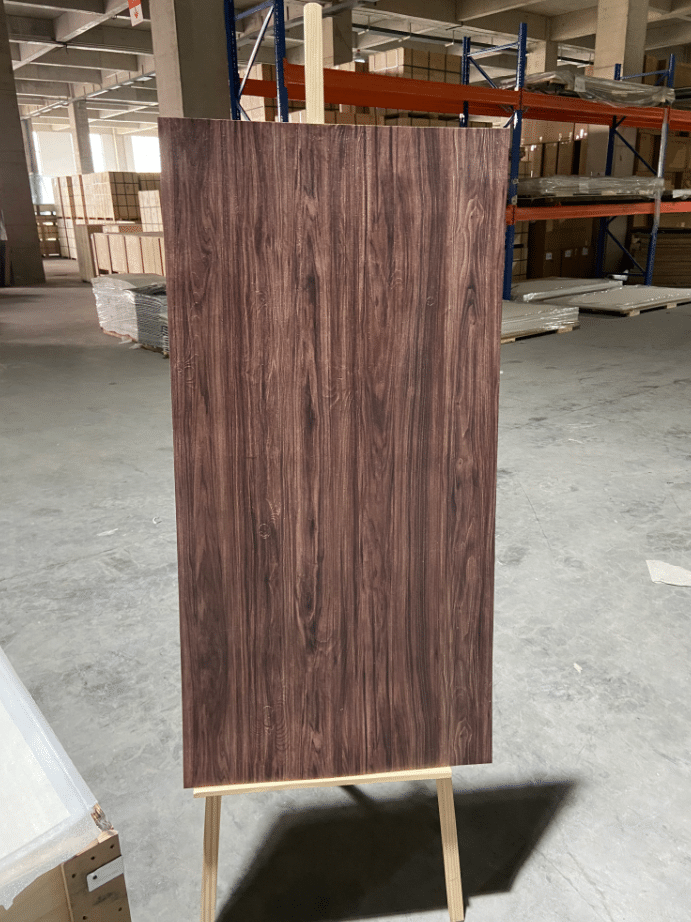
This is where the combination of texture and pattern becomes powerful. The printing is not applied to a smooth surface—it follows the contours of the embossed grain. The darker tones of the walnut pattern settle into the grooves, while the lighter tones highlight the raised ridges. The result is a panel where the visual pattern and the physical texture reinforce each other. The grain lines you see are the same grain lines you feel.
We paid careful attention to color matching as well. American walnut is not a single flat color. It ranges from deep chocolate brown to lighter caramel tones, with subtle reddish and golden undertones. The printed design captures this variation, so the panel has the depth and richness that makes walnut so prized.
The Result: A Panel That Looks and Feels Like Walnut
The final product is a flexible stone panel with a wood-grain embossed texture, printed in an American walnut pattern. The client approved the sample, and we moved to production.
What makes this panel successful is that it does not rely on just one sense. Visually, it reads as American walnut—the color, the grain, the natural variation are all there. Tactilely, it also reads as walnut—the embossed texture provides the subtle ridges and grooves that your fingers expect when they touch a wood surface. This dual-layer realism is what separates a good printed panel from a great one.
And yet, underneath it all, it is still flexible stone. It retains the flexibility, the durability, the moisture resistance, and the fire performance of our mineral-based panels. The client gets the beauty of walnut without the drawbacks of actual wood—no warping, no rotting, no termite concerns, no need for periodic refinishing.
What This Means for Your Project
This project illustrates a broader principle: flexible stone is not limited to stone looks. By combining different base textures with different printed patterns, we can create an enormous range of appearances. Wood grains, stone textures, abstract designs, metallic effects—the possibilities are extensive.
If you have a design vision that requires a specific appearance, I encourage you to reach out and discuss it with us. We can review our available base textures, discuss the printing options, and produce samples for your evaluation. The American walnut panel described here is just one example of what is possible when texture and pattern are designed together.
Our Engineering Support
As always, our production and engineering department is here to support your project. We can provide drawing review, material calculation, and detailed quotations. We can advise on panel thickness, fire classification, and accessory selection. And for custom appearance requirements like this one, we can work with you from the initial concept through to the approved sample and final production.
If you would like to explore a custom flexible stone design, or if you have any questions about our products, reach out to me directly. I’m Wald, and I am always glad to talk through the possibilities.